
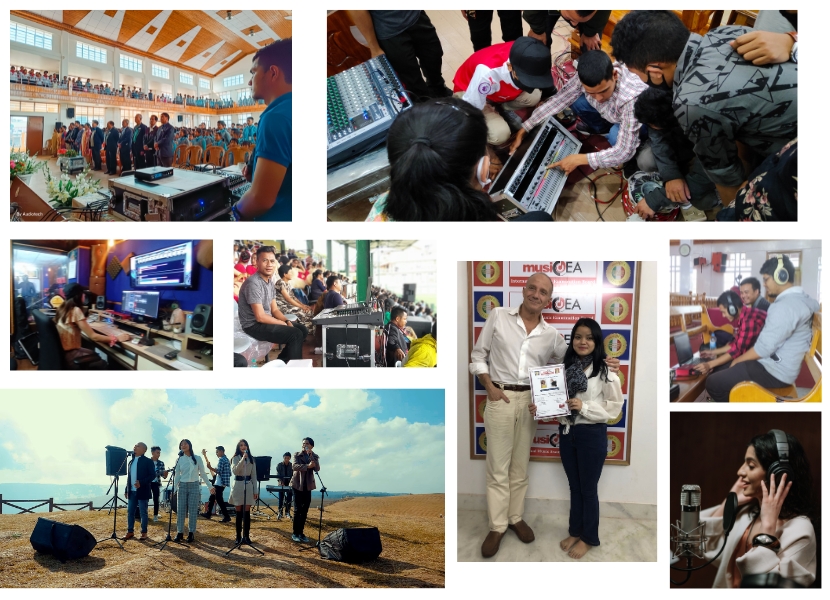
The Indian music, film, OTT, gaming, and live entertainment industries are booming—and behind every powerful song, cinematic dialogue, viral podcast, or electrifying concert is a skilled audio engineer. As content creation explodes across platforms, the demand for professionally trained sound experts has never been higher.
This growing demand has pushed audio engineering courses in India into the spotlight. Today, audio engineering is no longer a niche career—it’s a respected, well-paid profession blending creativity with cutting-edge technology.
Whether you dream of working in a recording studio, mixing live concerts, producing films, or building a career in music production, choosing the right audio engineering course in India can shape your future.
This guide breaks down everything you need to know—courses, eligibility, career scope, salaries, skills, future trends, and FAQs—so you can make an informed decision in 2026 and beyond.
Audio engineering is the technical and creative art of recording, mixing, editing, and reproducing sound. Audio engineers work with:
Music production
Film and television sound
Live sound and events
Radio and podcasts
OTT platforms
Gaming audio
Advertising and media production
Modern audio engineers combine technical expertise, creative listening, and software mastery to deliver professional-quality sound across multiple platforms.
India offers a unique advantage for aspiring audio engineers due to its massive entertainment ecosystem.
World’s largest film industry
Rapidly growing independent music scene
OTT platforms creating original content
Rising demand for live events and concerts
Growth in gaming, AR/VR, and immersive audio
Affordable, industry-oriented courses
With the right training, students can build global careers while studying locally.
Audio engineering programs in India are designed for beginners as well as advanced learners.
Ideal for: Beginners, musicians, content creators
Duration: 6 months – 1 year
What you learn:
Sound fundamentals
Studio recording techniques
Mixing & mastering basics
DAWs (Pro Tools, Logic Pro, Ableton)
Microphone handling
Ideal for: Career-focused students
Duration: 1 – 2 years
What you learn:
Advanced studio workflows
Live sound engineering
Film & post-production audio
Acoustics & signal flow
Industry-level projects
Ideal for: Academic + technical learners
Duration: 3 years
Focus:
Audio technology
Sound design
Music production
Media studies
Note: Practical exposure varies by institute.
Ideal for: Skill upgrades & freelancers
Duration: 3–6 months
Specializations include:
Music production
Sound design
Mixing & mastering
Podcast & broadcast audio
Most institutes keep eligibility flexible:
| Course Level | Eligibility |
|---|---|
| Diploma | 10+2 (any stream) |
| Advanced Diploma | 10+2 or equivalent |
| Degree | 10+2 (preferred science/arts) |
| Certification | Open to all |
Musical background is helpful but not mandatory.
A well-structured audio engineering course in India helps you master both technical and creative skills.
DAW operation (Pro Tools, Logic, Cubase)
Microphones & signal chains
Studio acoustics
Sound editing & mastering
Live sound setup
Critical listening
Sound aesthetics
Problem-solving
Team collaboration
Client communication
Workflow management
The career opportunities are diverse and continuously expanding.
Audio Engineer
Sound Engineer
Music Producer
Mixing & Mastering Engineer
Live Sound Engineer
Sound Designer
Podcast Producer
Broadcast Engineer
Game Audio Designer
Salary depends on skill level, experience, and specialization.
| Experience Level | Average Salary (India) |
|---|---|
| Fresher | 2.5 – 4 LPA |
| 2–4 Years | 5 – 8 LPA |
| 5+ Years | 10 – 20+ LPA |
| Freelancers | 3,000 – 15,000 per project/day |
Skilled freelancers and producers often earn significantly more than fixed salaries.
Film & Television
Music studios
OTT platforms
Radio & podcasts
Advertising agencies
Gaming & animation
Event & live sound companies
Ed-tech & media startups
Audio engineering is evolving fast with technology.
Dolby Atmos & spatial audio
AI-assisted mixing tools
Game & VR audio design
Podcast & creator economy
Remote collaboration studios
Immersive live sound experiences
Professionals who adapt to new tools will stay ahead in the industry.
Before enrolling, evaluate these factors:
Industry-experienced faculty
Hands-on studio training
Updated equipment & software
Internship opportunities
Placement or career guidance
Alumni success stories
Practical project exposure
Avoid programs that focus only on theory without real studio practice.
Creative and technical balance
High demand across industries
Freelance and global opportunities
Continuous learning & innovation
Passion-driven career
Initial struggle without skills
Irregular work hours
Freelance income fluctuation
Requires continuous upskilling
Is audio engineering a good career in India?
Yes. With growing digital content, OTT platforms, and live events, audio engineering offers strong long-term career potential.
What is the duration of audio engineering courses in India?
Courses range from 3 months to 3 years, depending on diploma, certification, or degree programs.
Do I need maths or science for audio engineering?
No. While basic physics helps, creativity and listening skills matter more.
Can I earn well after audio engineering courses?
Yes. Skilled professionals earn competitive salaries, especially in freelancing, music production, and post-production.
Is audio engineering future-proof?
Absolutely. Audio is essential across media, entertainment, gaming, and immersive technologies.
If you’re passionate about sound, music, technology, and storytelling, audio engineering courses in India offer a powerful gateway into a creative and financially rewarding career.
With India’s fast-growing entertainment ecosystem and global demand for skilled audio professionals, now is the best time to invest in professional training. Choose a course that emphasizes practical learning, industry exposure, and future-ready skills.